Experience transformative healing with our Single Session Grief and Bereavement Coaching, designed to guide you through the challenging journey of loss with empathy and support.
Personalized, compassionate support to navigate grief and bereavement
One-on-one session tailored to your unique emotional needs
Expert guidance on coping strategies and emotional healing
Find solace and understanding during your grieving process with our dedicated support, empowering you to embrace healing with compassion and strength.Focused trouble shooting
There's a kind of grief that starts before anyone dies.
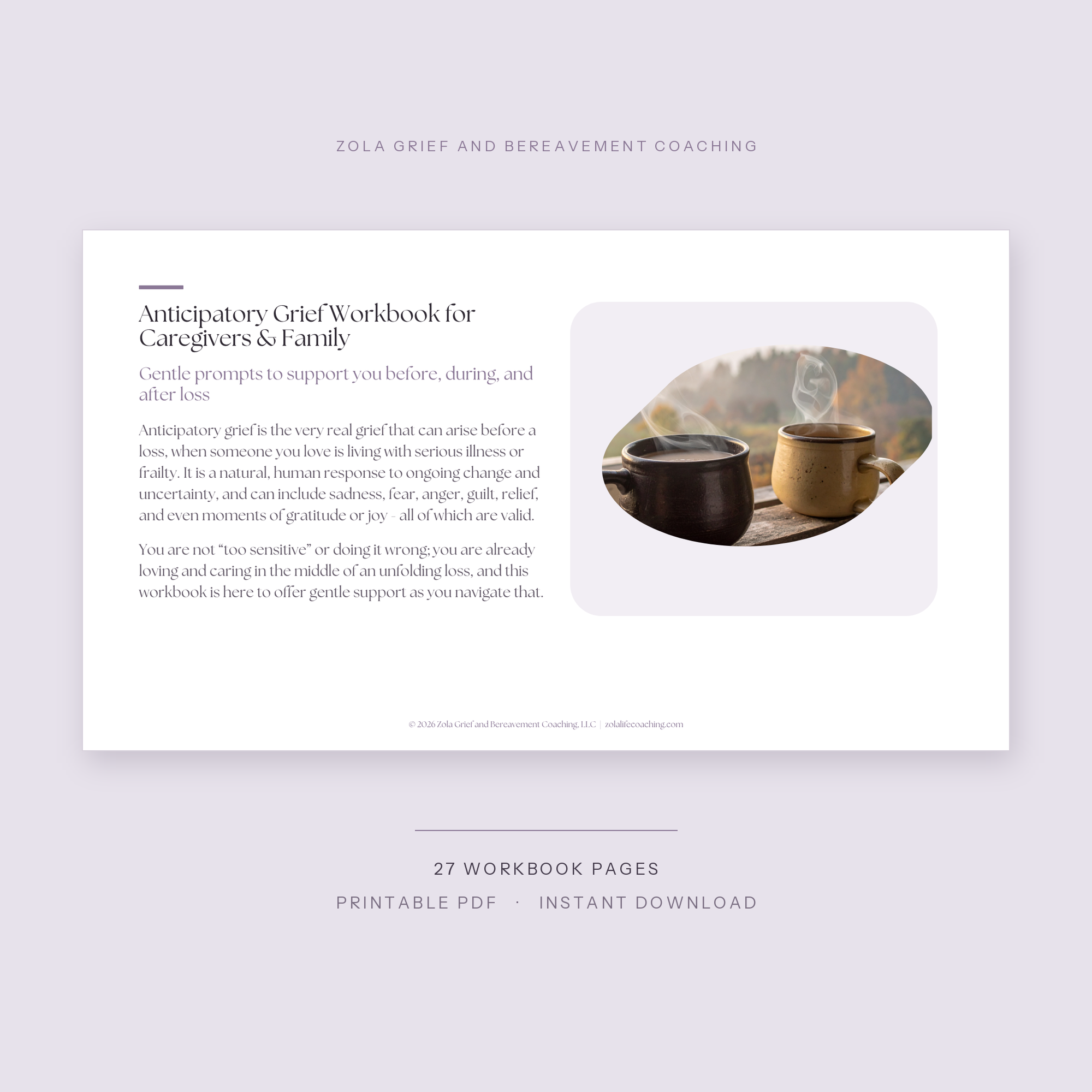
It shows up when someone you love is living with serious illness or frailty. You're still cooking their meals and driving to appointments, and you're already mourning — the person they were last year, the future you'd planned, the version of your own life you set down to do this. That's anticipatory grief, and it's real grief.
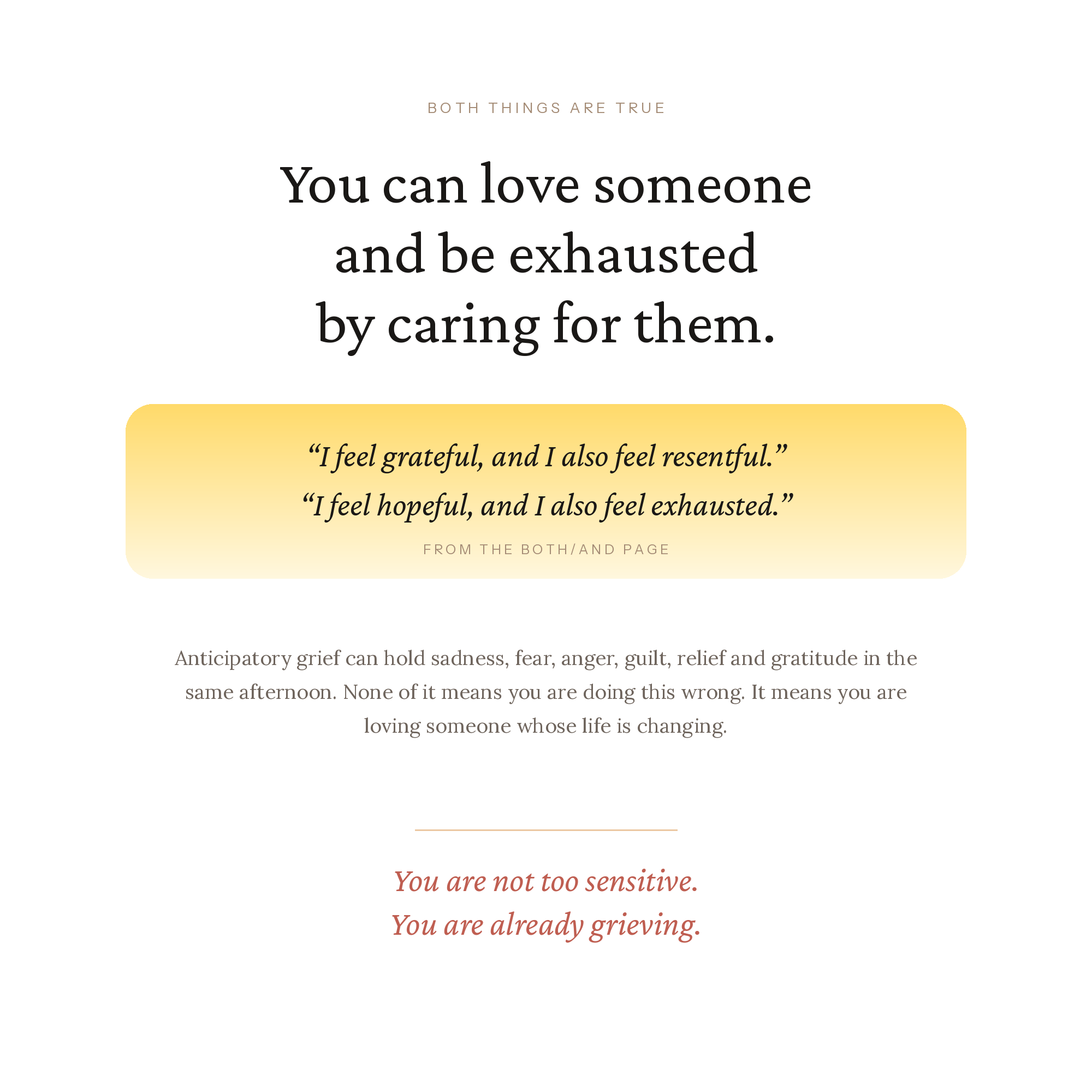
It rarely arrives alone. Sadness and fear, yes. But also anger, guilt, numbness, relief, and moments of genuine gratitude, sometimes within the same afternoon. None of that means you're doing it wrong.
This workbook makes room for all of it.
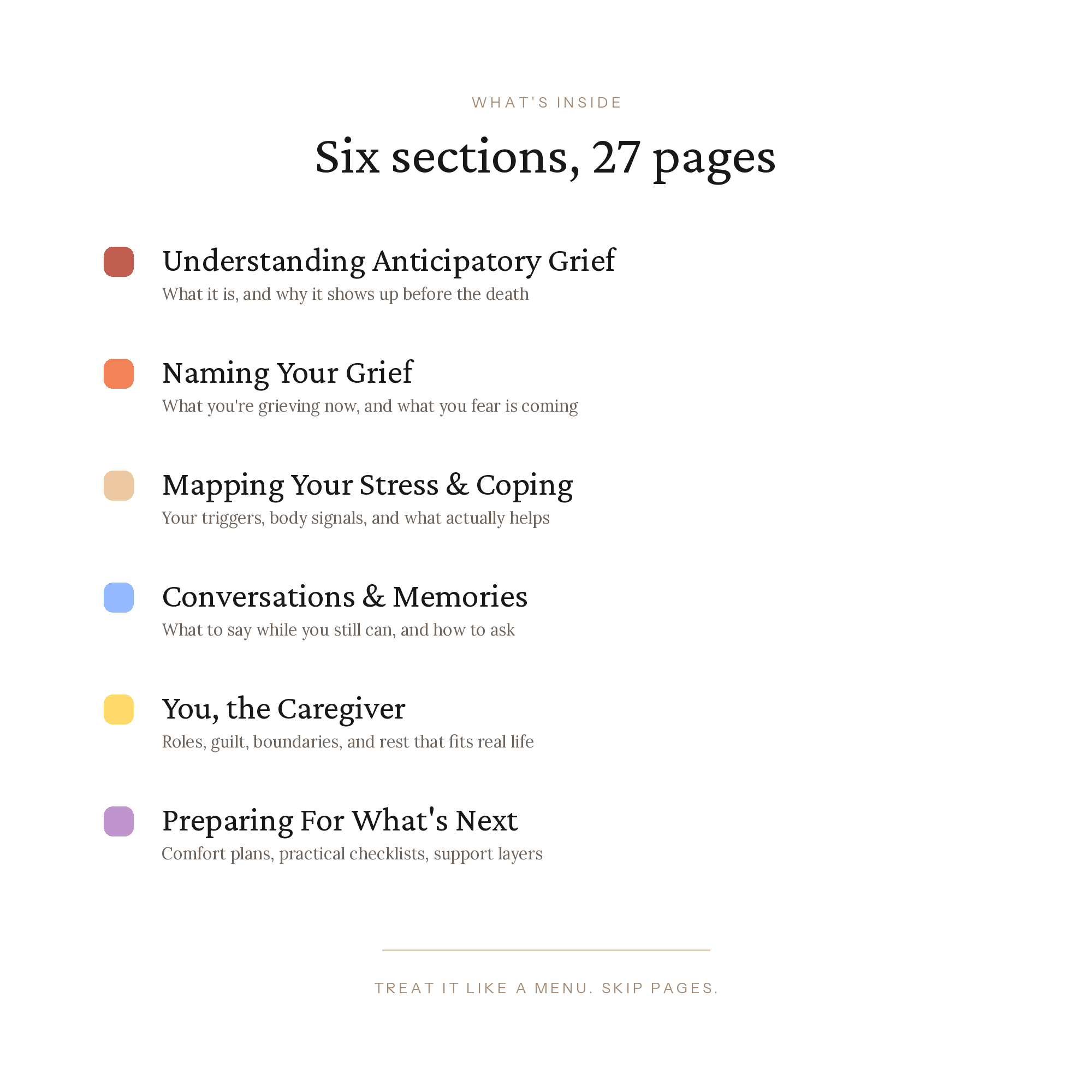
WHAT'S INSIDE — 27 pages, six sections
Understanding Anticipatory Grief — what it is, why caregiver grief counts, and the shape it usually takes
Naming Your Grief — what you're grieving now, what you fear is coming, and a Both/And page for holding two true things at once
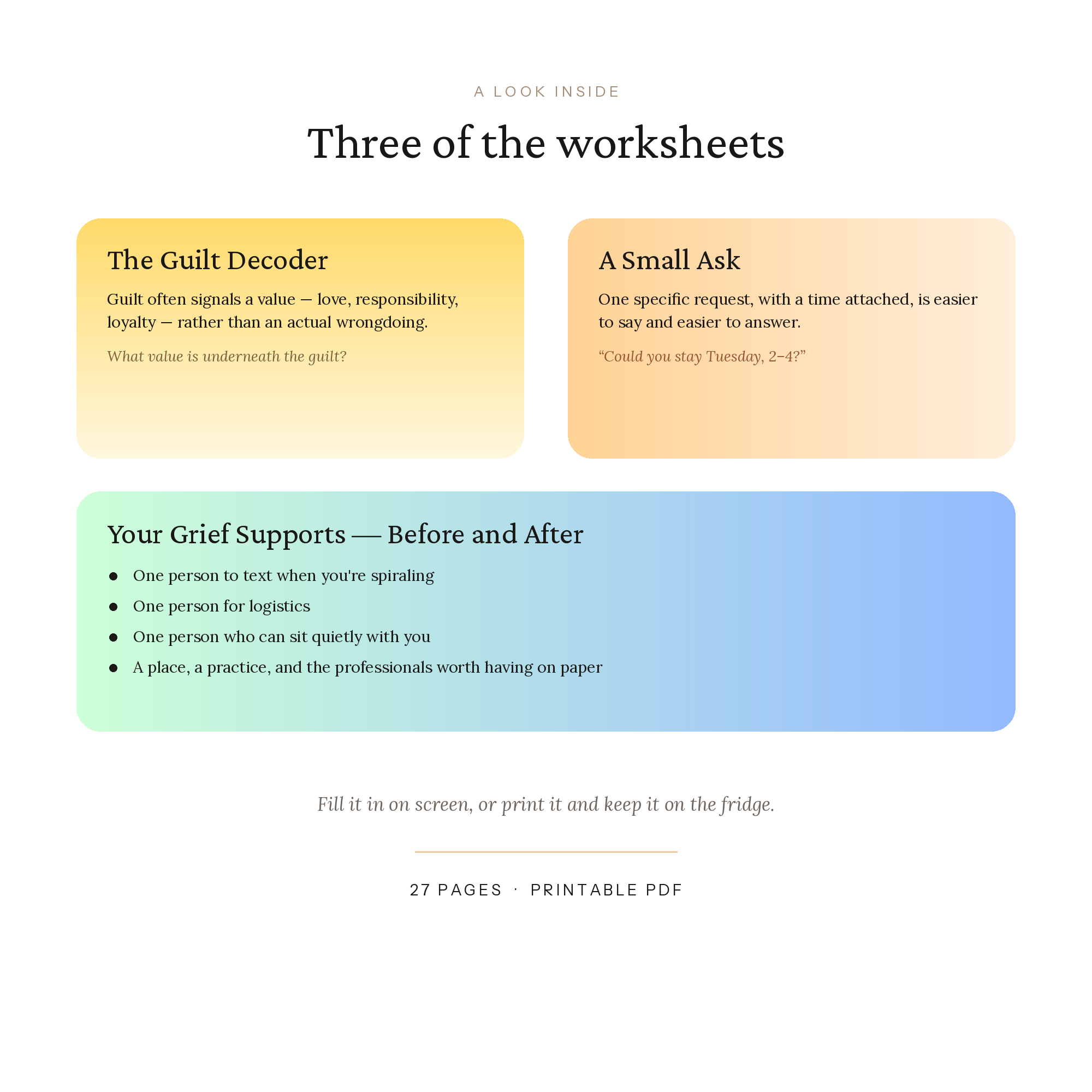
Mapping Your Stress & Coping — your triggers, your body's stress signals, what's inside your control and what isn't, and how to ask for help without apologising for it
Conversations, Meaning & Memories — what you want them to know while they can still hear it, questions worth asking, unfinished business, and low-pressure ways to keep a memory
You, the Caregiver — the roles you've absorbed, a Guilt Decoder for reading guilt as a value rather than a verdict, boundaries, and micro-rest that fits a real day
Preparing For What's Next — a comfort and values plan, a practical checklist, your support layers for before and after, and a letter to the version of you who's had a terrible day
WHAT YOU GET
A 27-page PDF, formatted for landscape printing or filling in on screen. Print it once, print it again in three months when things have changed. It's yours to keep.
HOW TO USE IT
You don't have to work through it in order. Treat it like a menu — one small section at a time. If a page increases distress, close it and come back, or do it with someone you trust. Nothing in here is homework.
WHO IT'S FOR
Anyone caring for someone with a terminal diagnosis, dementia, a progressive condition, or the slow decline of old age. Adult children, spouses, siblings, friends, chosen family. Useful at any stage — early diagnosis, the long middle, or the last weeks.
Also used by hospice staff, chaplains, grief coaches and support group facilitators, though group and professional use requires a license. Details are on the terms page and I'm glad to arrange one.
A NOTE
Digital download — no physical item ships. Educational material, not a substitute for medical advice, therapy, or crisis care.
Created by Molly Zola, Zola Grief and Bereavement Coaching.
Grief doesn't wait for a convenient moment. It shows up in grocery aisles, in the car, at family dinners, in the middle of ordinary Tuesdays. And when it comes, most people feel two things at once: overwhelmed, and completely alone.
This workbook is for those moments.
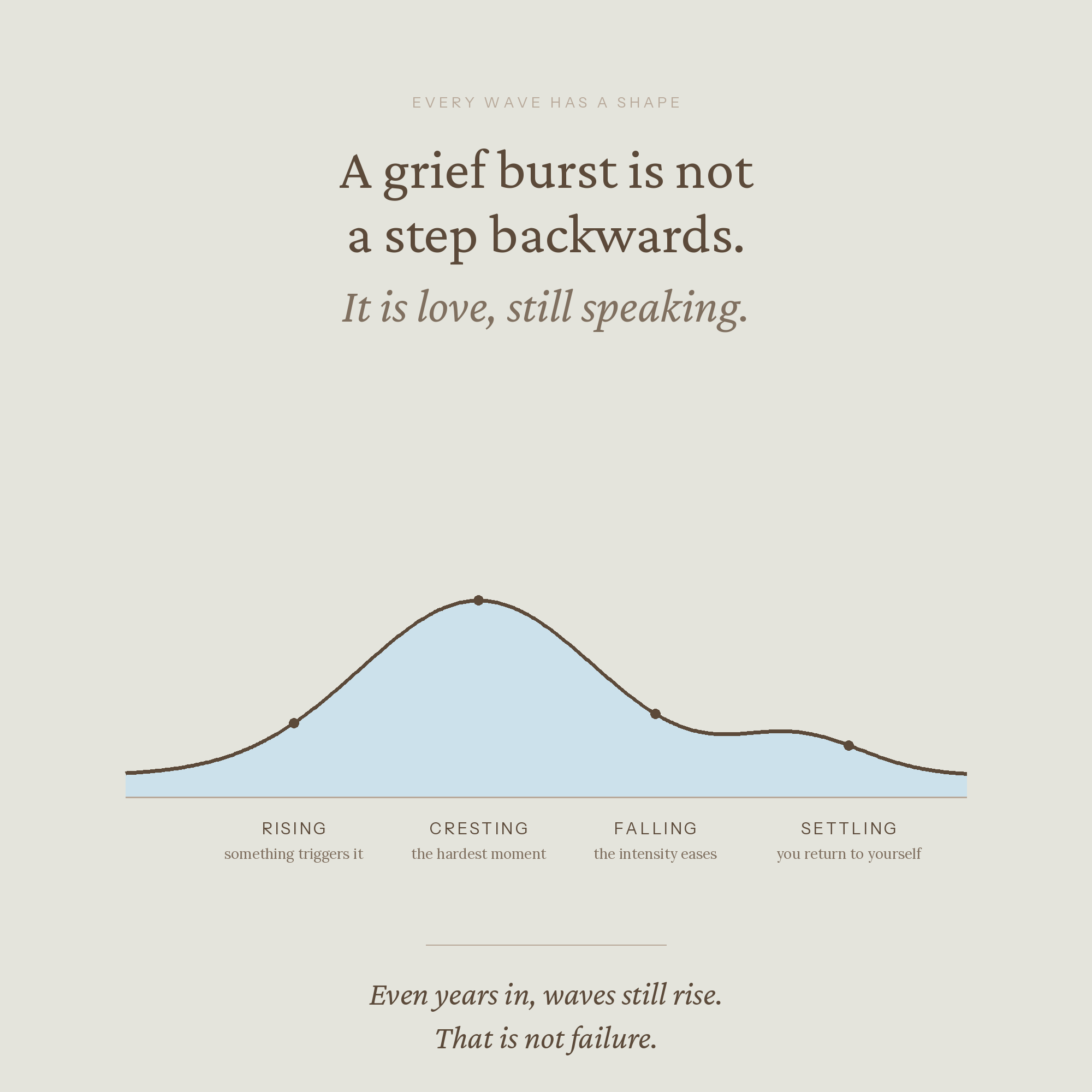
A grief burst is a sudden, intense wave that can arrive without warning, often long after the loss itself. A tightness in the chest. Tears you can't stop, or tears that won't come. A pull to hide, or a pull to run. It is not a sign that you're going backwards. It's a sign that you loved deeply.
Every wave follows the same four-part shape — rising, cresting, falling, settling — and once you can recognise that shape, the waves stop feeling like ambushes.
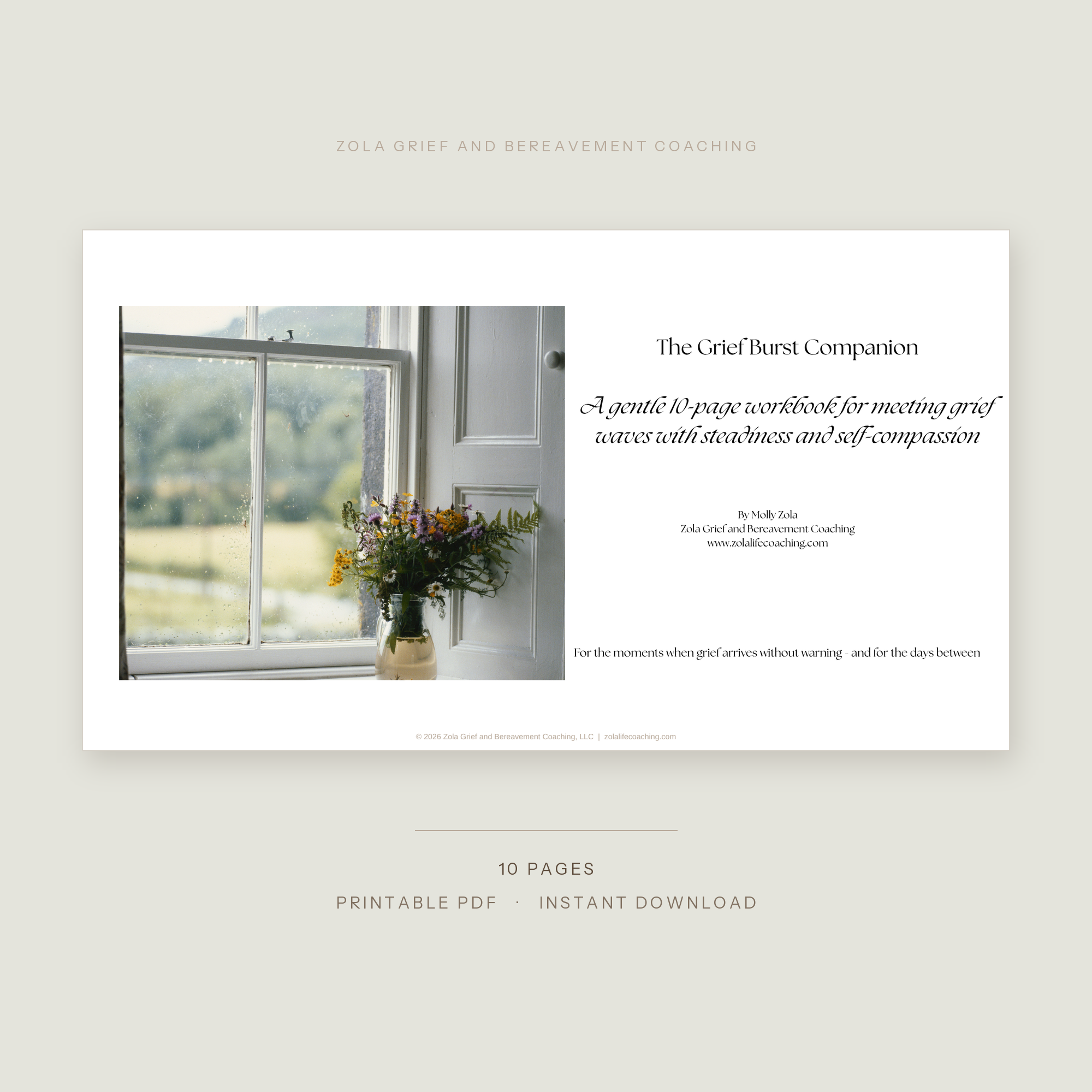
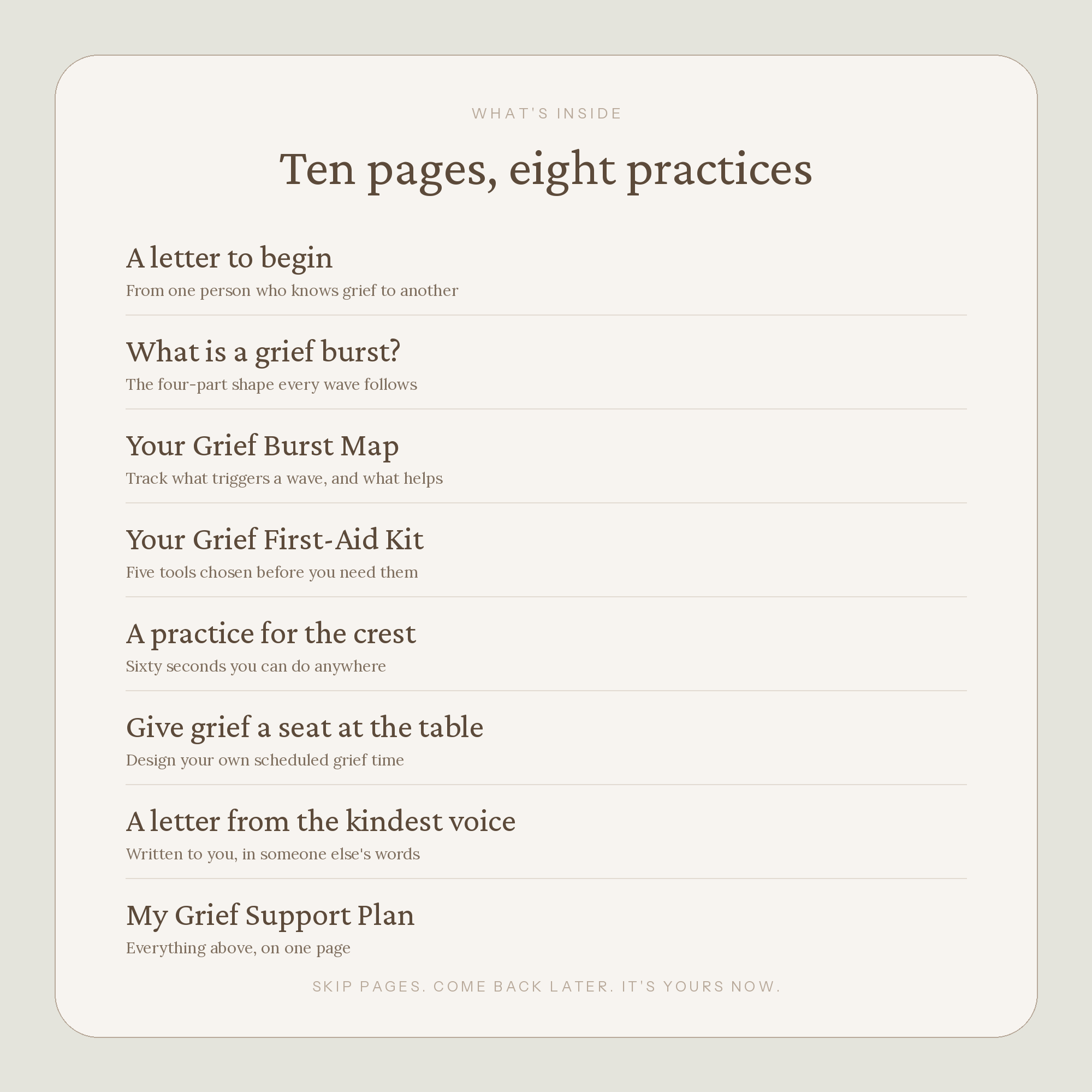
WHAT'S INSIDE — 10 pages
A letter to begin, from one person who knows grief to another
What is a grief burst? The four-part shape every wave follows
Your Grief Burst Map — a tracking page for what sets off a wave, what your body did, how long it lasted, and what helped
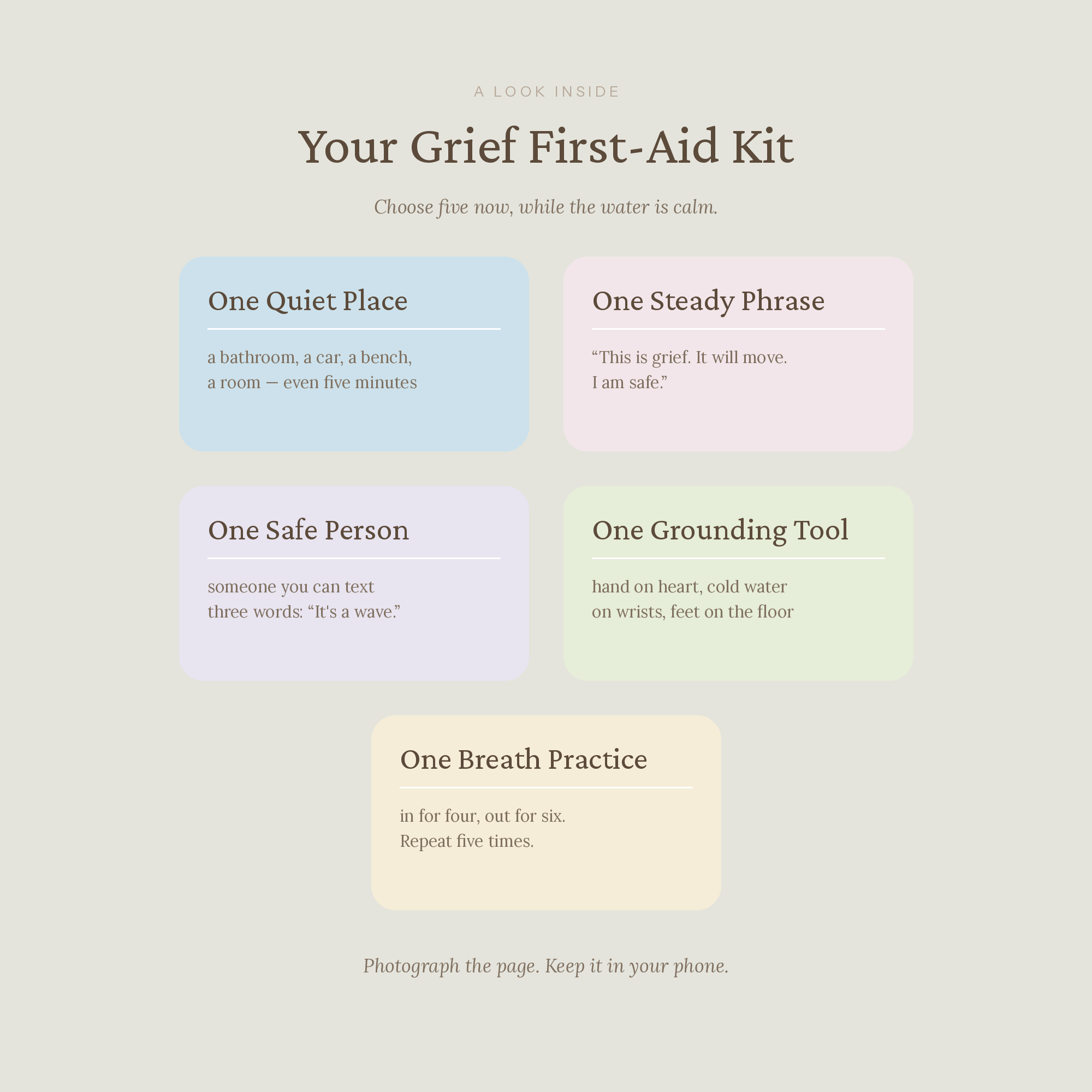
Your Grief First-Aid Kit — five tools chosen now, while the water is calm, so you're not searching for them mid-wave
A 60-second practice for the crest, using compassionate touch and breath
Give Your Grief a Seat at the Table — design your own scheduled grief time, with frequency, duration, and opening and closing rituals
A letter from the kindest voice you know — written to you, in someone else's words
My Grief Support Plan — everything above, on one page
WHAT YOU GET
A 10-page PDF formatted for landscape printing, or fill it in on screen. Print it once, print it again next month, put it in a binder. It's yours to keep.
HOW TO USE IT
Move through it at your own pace. Skip pages. Come back later. Cry on it. Underline things. There's no order you're supposed to follow and nothing you can do wrong with it.
WHO IT'S FOR
Anyone grieving a death, at any point after the loss — early weeks or several years on. Especially useful if the waves have started catching you off guard in public, or if you've begun to wonder whether you should "be past this by now." You shouldn't. Nobody is.
Also useful for therapists, grief coaches and support group facilitators, though group and professional use requires a license. Details are on the terms page and I'm glad to arrange one.
A NOTE
This is a digital download — no physical item ships. It's educational material and not a substitute for therapy or crisis care.
Created by Molly Zola, Zola Grief and Bereavement Coaching.

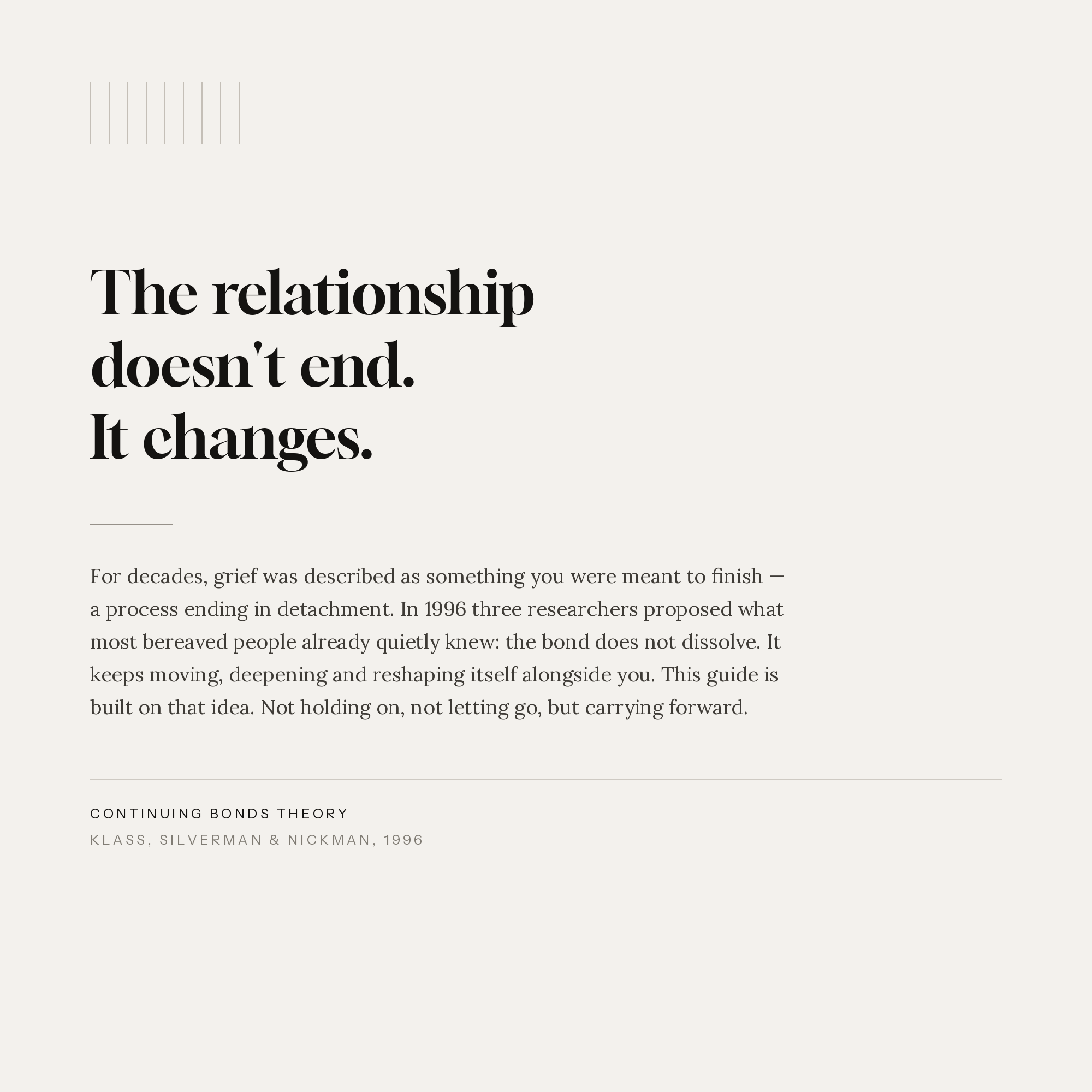
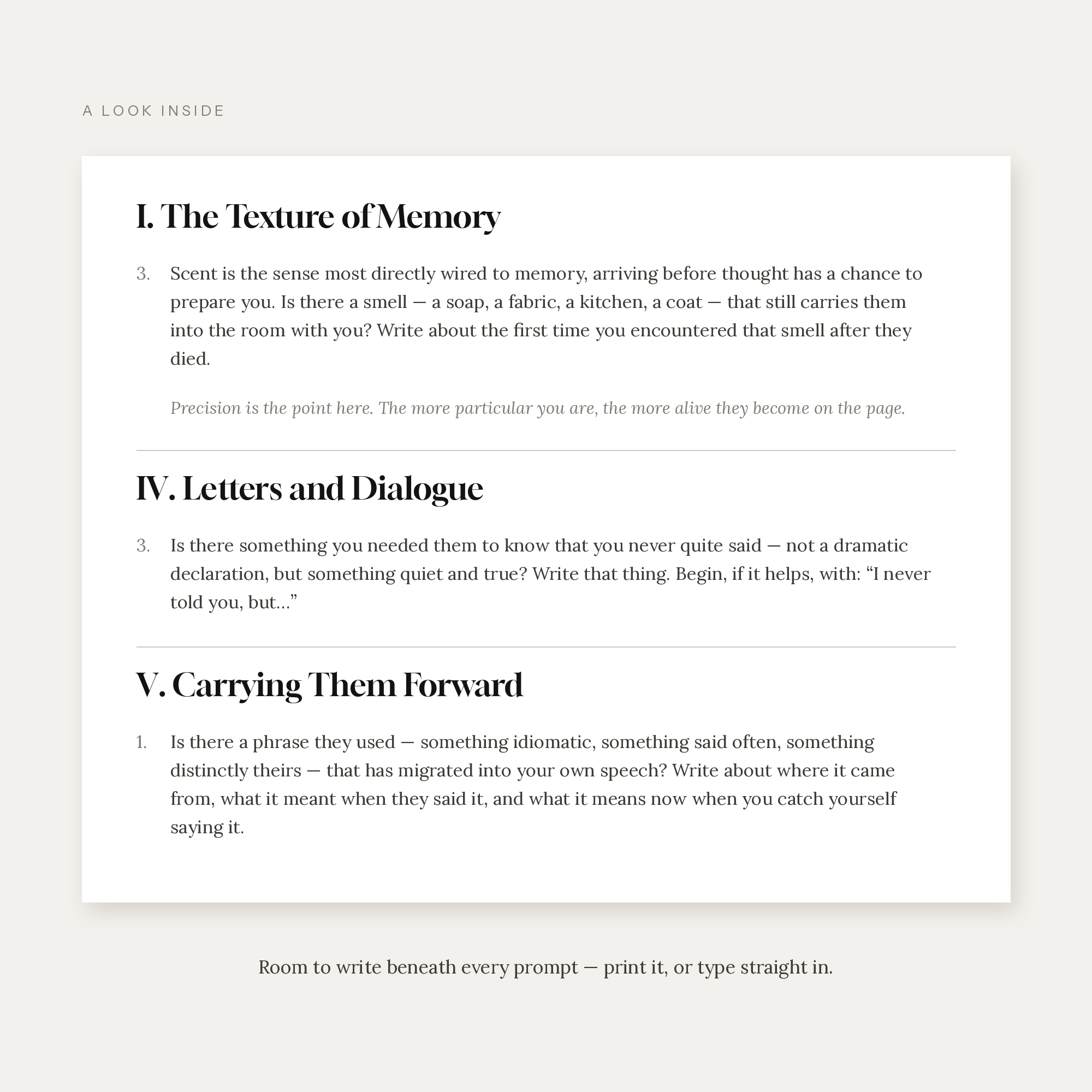
For a long time, grief was described as something you were supposed to finish. You worked through the stages, arrived somewhere, and moved on. Most bereaved people know that isn't how it goes.
In 1996, researchers Dennis Klass, Phyllis Silverman and Steven Nickman proposed what has since become one of the most useful ideas in grief work: the relationship doesn't end when someone dies. It changes. You keep knowing them. Your understanding of them keeps growing. The bond moves alongside you.
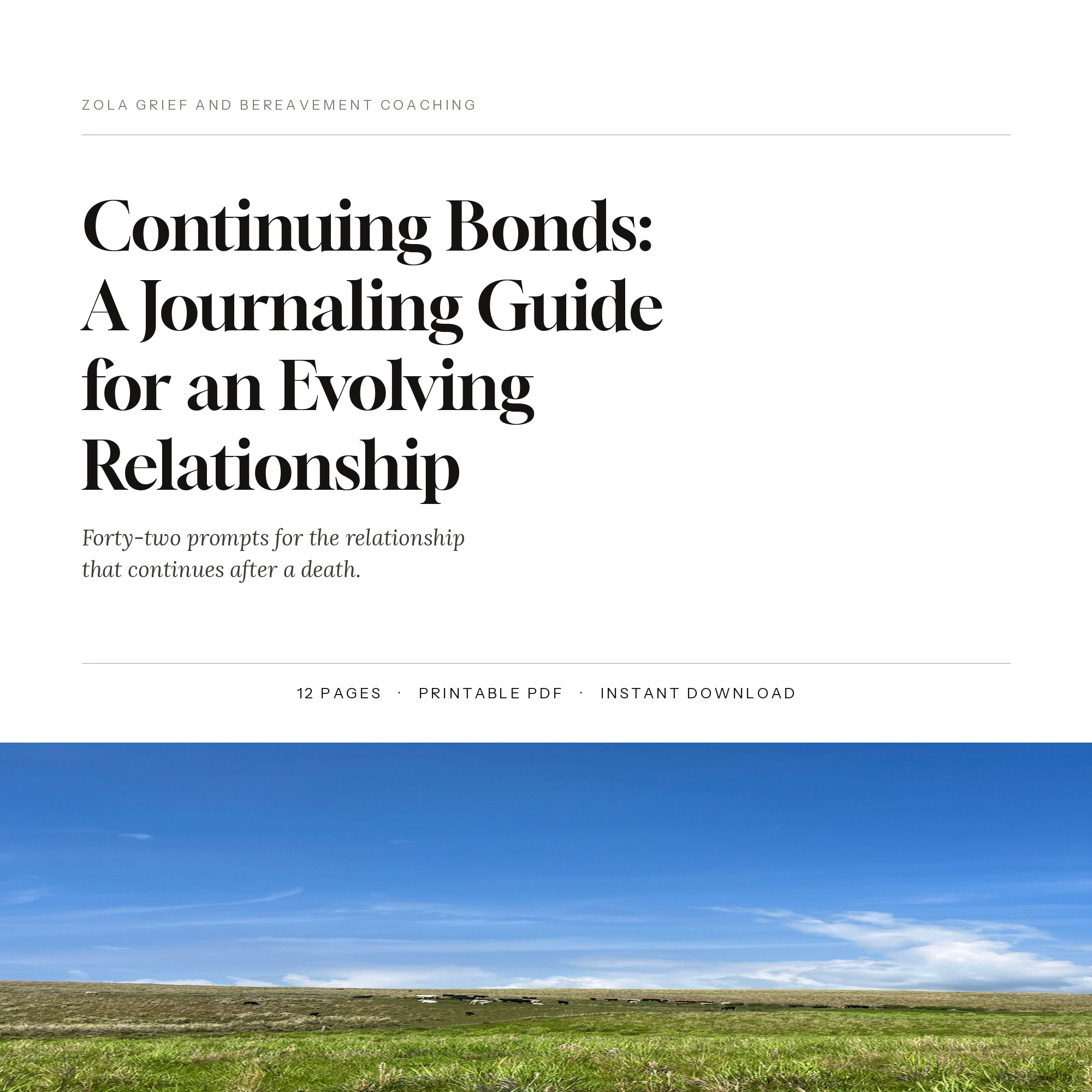
This guide is built on that idea. Forty-two writing prompts across seven sections, designed to help you tend the relationship rather than close it.
WHAT'S INSIDE
I. The Texture of Memory — the sensory particulars: a laugh, a smell, the shape of their hands
II. The Living Story — their life as a story, including the chapters you never saw
III. The Evolving Relationship — what you understand about them now that you didn't then
IV. Letters and Dialogue — the unfinished conversation, in both directions
V. Carrying Them Forward — the phrases, habits and values you inherited without noticing
VI. Rituals and Presence — small practices that keep the bond in ordinary daily life
VII. Meaning and Becoming — what this loss has asked of you, and what it has opened
WHAT YOU GET
A 12-page PDF, formatted for landscape printing or for reading on a screen. Print it, put it in a binder, or write alongside it in a notebook of your own. It's yours to keep and return to.
HOW TO USE IT
This isn't a course with a destination and there's no order you're supposed to follow. Some prompts will find you ready. Some will wait months. A few may never be yours, and that's fine. Open it where you land.
WHO IT'S FOR
Anyone grieving a death — a parent, partner, child, sibling, friend — at any point after the loss. It works as well in year five as in month two, and often better. Also useful for therapists, grief coaches and support group facilitators, though group and professional use requires a license (details are on the terms page, and I'm glad to arrange one).
A NOTE
This is a digital download. No physical item ships. It's educational material, not a substitute for therapy or crisis care.
Created by Molly Zola, Zola Grief and Bereavement Coaching.

Nobody told you there would be a right way to grieve. But somehow, you’re certain you’re doing it wrong. Maybe you cried too much - or not enough. Maybe it’s been a year and people keep saying you should be “moving on.” Maybe you’re holding yourself together so well on the outside that you wonder if something is broken on the inside. Here’s the truth: the pain of loss is unavoidable. But the suffering that comes from judging yourself for how you grieve? That part we can work on - together in this workbook.

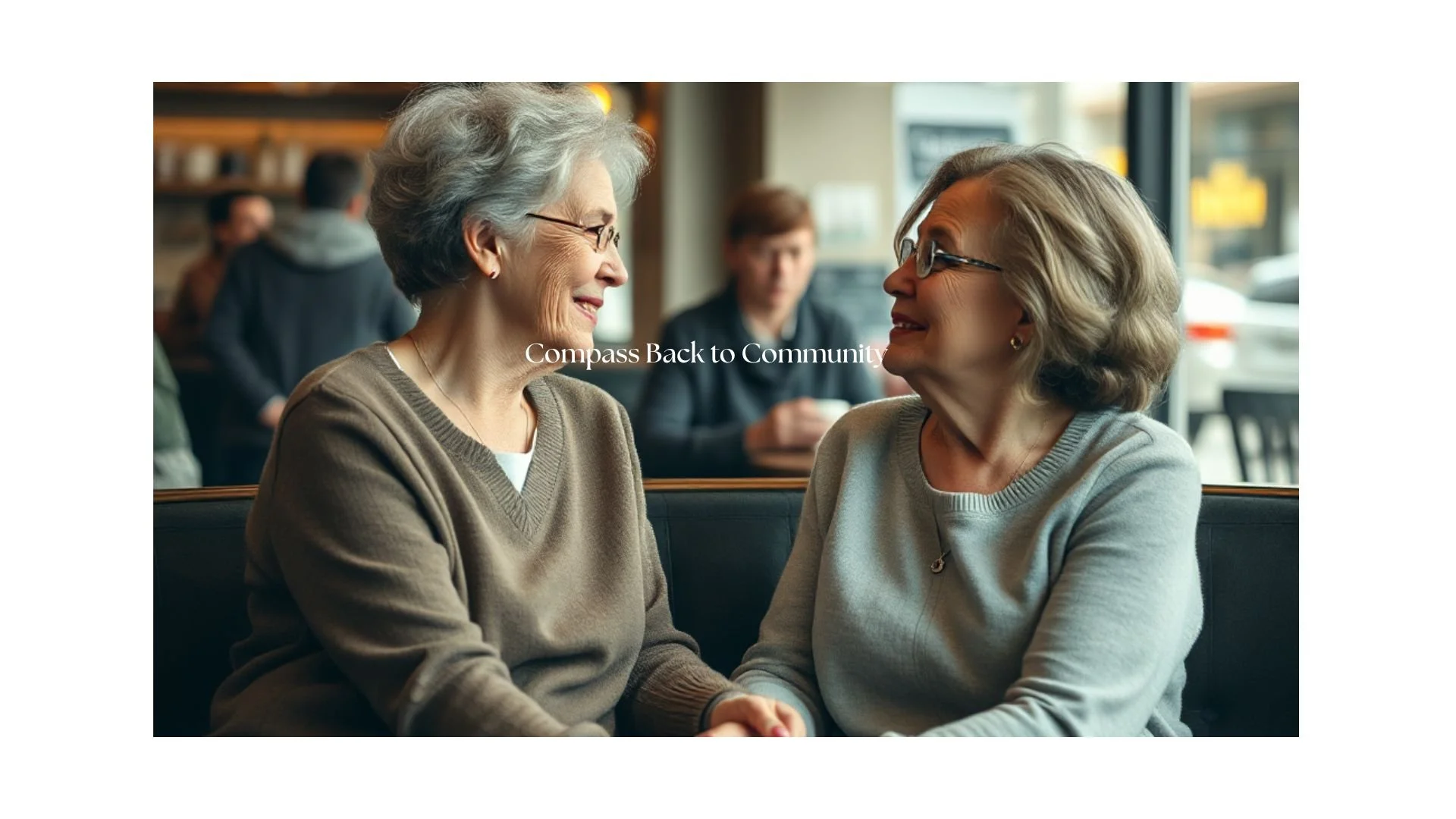
Navigate your path back to community after loss with The Compass to Community's structured 6-stage program. Designed to create a personalized approach that aligns with your unique journey, this program is your key to a thriving community connection.
8 comprehensive sessions guiding you through the 6 core stages of community building.
Personalized plan tailored specifically to your needs and goals.
Includes two short weekly check-ins and access to valuable resources.
Embark on The Compass to Community, where each stage aids in building resilience and finding meaning. Transform your journey with supportive guidance tailored to help you thrive.
Sliding Scale Pricing Available.

Shadows to Light is an 8-week group support program that provides a once per week group meeting in a safe, nonjudgemental environment, lead by a professional Grief and Bereavement Coach. Journaling guidance, skills and practices for problem management and resources for further assistance and connection.
This is a supportive group and is not intended to be replaced by therapy. Resources and referrals will be available for therapeutic supports.



Legacy projects are meaningful ways to ensure that important aspects of your loved one’s life continue to have an impact on the world. These projects aren’t about memorializing the past but about carrying forward what matters in active, living ways. Legacy project planning focuses on how your deceased loved one formed who you are today and how these aspects continue to live on within you. What values or qualities of theirs do you want to carry forward? What would they want their legacy to be? Legacy projects can provide profound meaning by transforming grief into purposeful action that benefits others while honoring what was most significant about your loved one. 4-6 sessions

The Path to Healing Grief is a structured, seven‑step coaching journey for adults grieving a loved one or moving through a major life transition. Together we’ll gently explore your emotional, physical, and social wellbeing so you can actually see your progress, even when it feels slow or messy.
This process creates hope by making growth visible, reassures you that healing is happening (even on hard days), and helps you feel more in control of your grief journey rather than at the mercy of it.
12, once a week, 90 minute sessions.

Gottman Institute Certified Seven Principles for Making Marriage Work Program Leader
The Gottman Institute is a globally renowned organization dedicated to improving relationships and marriages through research-based practices and interventions. Founded by Dr. John Gottman and Dr. Julie Schwartz Gottman, the institute is known for its work in relationship psychology , particularly in the areas of marital therapy and couple counseling.
The Institute employs a scientific approach to understanding relationships , relying on extensive empirical research, including observations of couples and longitudinal studies. This research has led to the development of effective therapeutic interventions designed to foster healthy relationship dynamics.
The Seven Principles For Making Marriage Work is a widely recognized book and program outlining key strategies couples can use to build and sustain strong relationships. As a Program Leader, Molly Zola leads couples into a deeper dive into Seven Principles, showing them how to strengthen their relationship, enhance their emotional bond, and improve their overall satisfaction in their life together.
The Program, using discussions, exercises and activities, takes participants through the following seven principles:
Enhance Your Love Maps - This principle emphasizes the importance of knowing your partner’s world. Couples should build a detailed understanding of each other’s history, dreams, preferences, and aspirations (the “Love Maps”). It’s about being intimately familiar with each other’s lives, which forms a strong foundation for a relationship
Nurture Your Fondness and Admiration - Maintaining a positive perspective about your partner is crucial. This principle encourages couples to express appreciation and affection regularly. By nurturing fondness and admiration, partners can counteract negativity and improve their connection, fostering goodwill and respect even during conflicts.
Turn Towards Each Other Instead of Away - Couples are encouraged to recognize and respond to each other’s bids for attention, affection, and support. Turning towards each other means actively engaging with your partner’s attempts to connect, rather than dismissing or neglecting them. This practice builds emotional intimacy and strengthens the bond between partners.
Let Your Partner Influence You - This principle focuses on mutual respect and allowing influence in decision-making. Couples would value each other’s opinions and feelings, which promotes equality in the relationship. When partners feel they can express themselves and be heard, it leads to greater collaboration and partnership.
Solve Your Solvable Problems- Not all conflicts in a relationship can be resolved, but man can. This principle provides strategies for addressing solvable problems through effective communication and compromise. It includes identifying the issue, discussing it calmly, and brainstorming solutions together.
Overcome Gridlock -Gridlock occurs when couples face perpetual issues that lead to recurring conflicts. This principle encourages couples to understand the underlying dreams and values associated with these conflicts. By gaining insight into each other’s deep needs and desires, partners can work towards finding a way to accommodate these issues, rather then allowing them to lead to resentment.
Create Shared Meaning- This principle emphasizes the importance of creating a shared sense of purpose and meaning within the relationship. It involves developing rituals, shared goals, and values that strengthen the couple’s bond. Couples are encouraged to cultivate traditions, shared dreams, and a common vision for their life together, thus enhancing their emotional connection.
This tickets for this program are sold at a per couple price.
No results match your search. Try removing a few filters.