
 Image 1 of 4
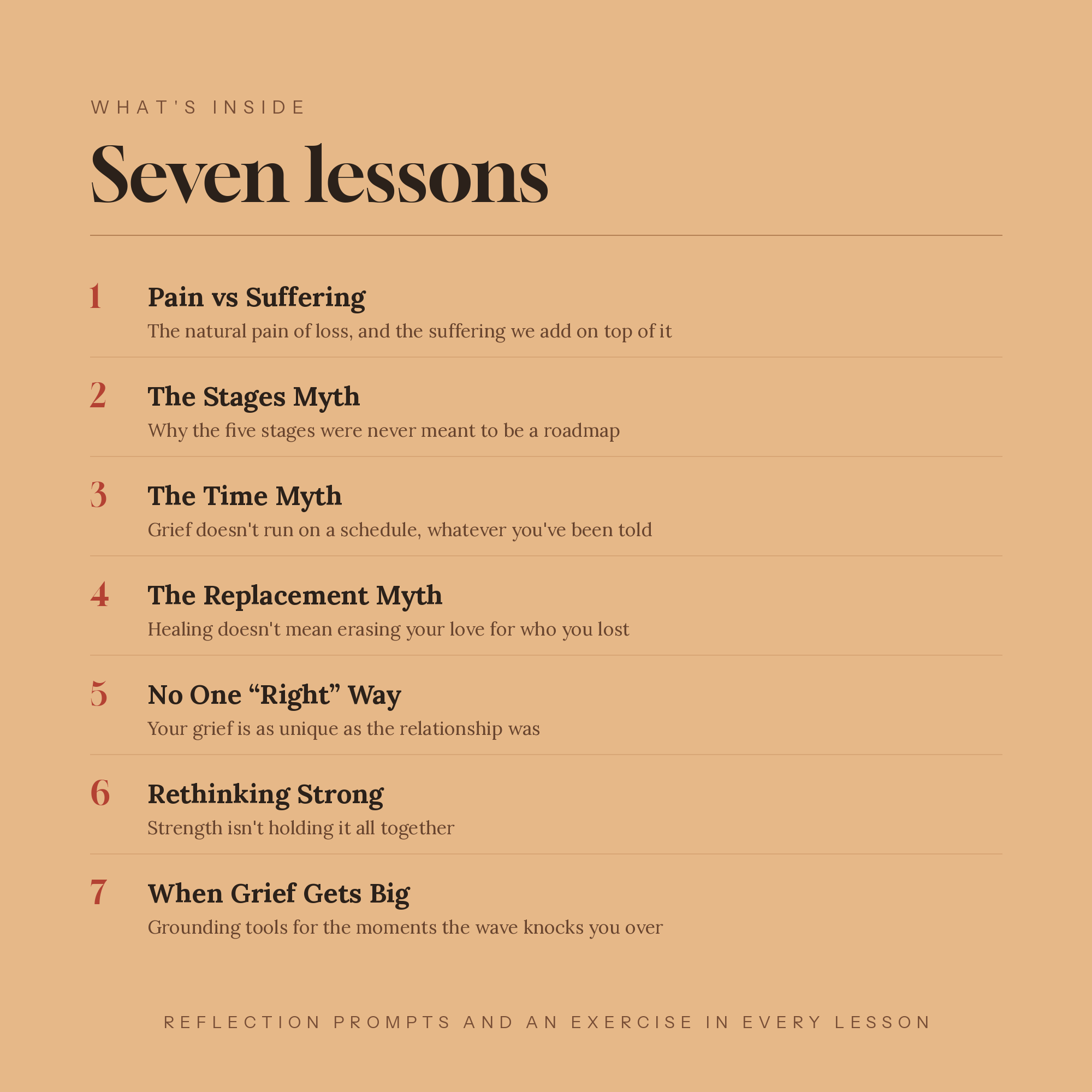 Image 2 of 4
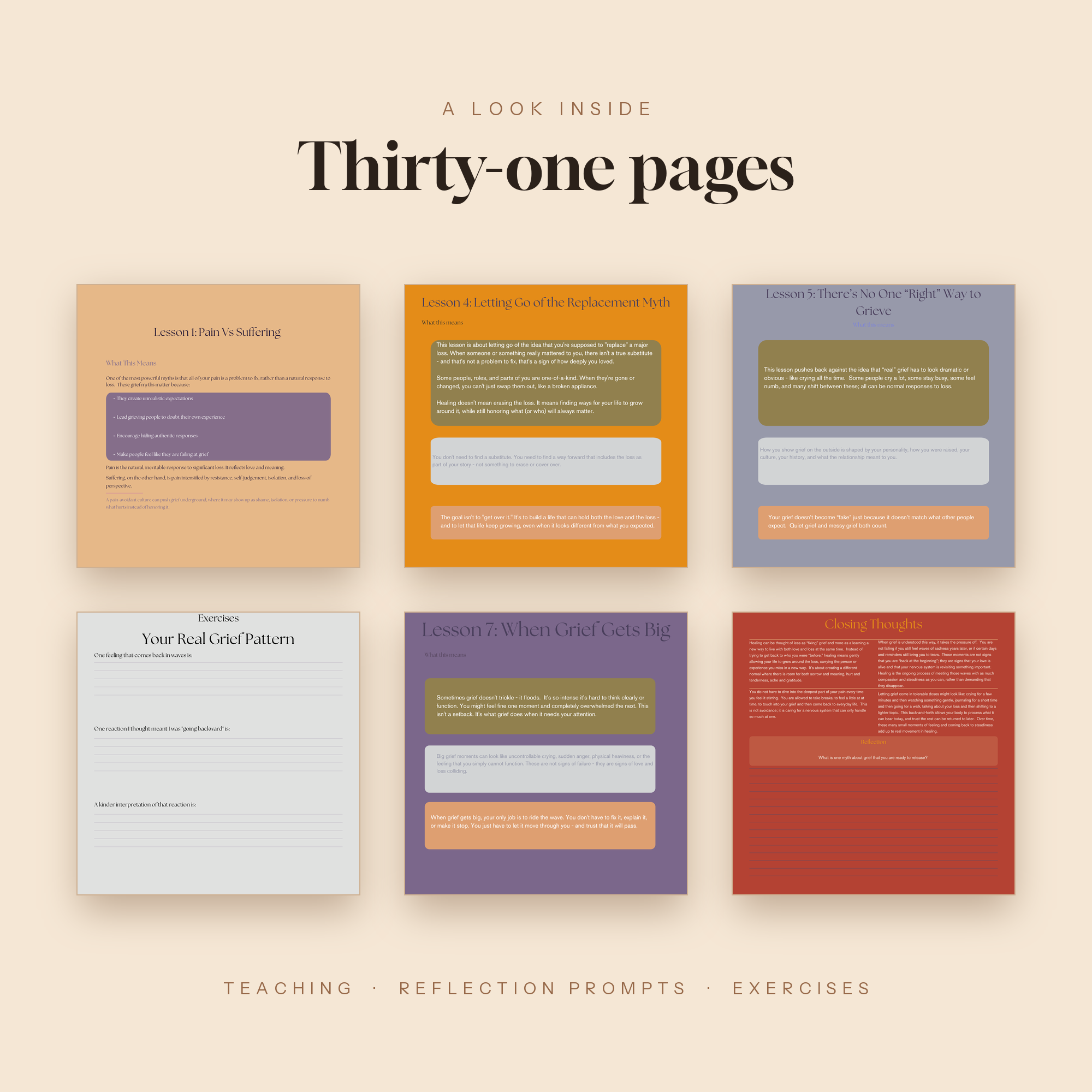 Image 3 of 4
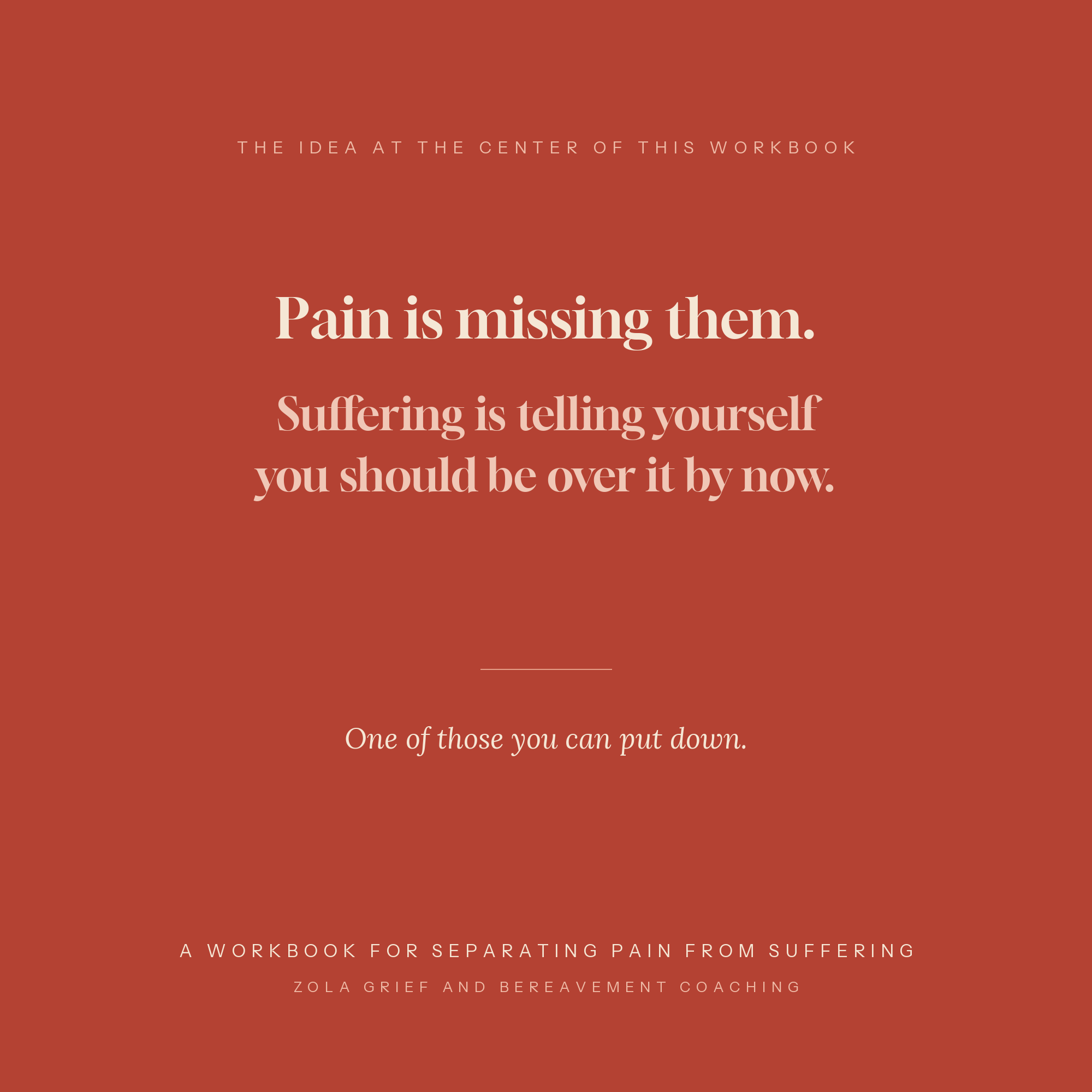 Image 4 of 4
Grief is hard enough without the extra weight of feeling like you're doing it wrong.
Most of us absorbed a set of rules about loss somewhere along the way. Be over it by now. Don't fall apart in front of people. Move through the stages in order. Find something to fill the space. None of those rules came from your actual heart, and none of them hold up when you're the one grieving.
This mini workbook helps you tell the difference between two things that get tangled together: the pain that comes naturally from loving someone or something you lost, and the suffering that piles on top when you judge yourself for hurting.
Inside, you'll work through seven short lessons:
Pain vs. Suffering — what belongs to your loss, and what got added on
The Stages Myth — why the five stages were never a roadmap, and why you haven't missed a step
The Time Myth — grief doesn't run on a calendar
The Replacement Myth — healing doesn't mean erasing what mattered
There's No One "Right" Way to Grieve — quiet grief and messy grief both count
Rethinking What It Means to Be Strong — strength can look soft, shaky, and slow
When Grief Gets Big — grounding tools for the moments that flood
Each lesson has a short teaching section, reflection prompts, and a practical exercise you can actually fill in. Go in order or open to whichever page meets you where you are today. There's no schedule and no finish line.
This is for you if:
You've wondered whether you're grieving "correctly"
Someone told you to move on and it landed like a slap
Your grief doesn't look the way you expected it to
You want something to work through privately, at your own pace
Format: [XX] PDF, instant download. Print it out or fill it in on your device. Yours to keep and return to whenever you need it.
This workbook is educational and isn't a substitute for therapy, crisis care, or medical treatment. If you're having thoughts of harming yourself or others, or you feel completely overwhelmed, please reach out to your local crisis line or a licensed mental health professional.
Created by Molly at Zola Grief and Bereavement Coaching, LLC.
Grief is hard enough without the extra weight of feeling like you're doing it wrong.
Most of us absorbed a set of rules about loss somewhere along the way. Be over it by now. Don't fall apart in front of people. Move through the stages in order. Find something to fill the space. None of those rules came from your actual heart, and none of them hold up when you're the one grieving.
This mini workbook helps you tell the difference between two things that get tangled together: the pain that comes naturally from loving someone or something you lost, and the suffering that piles on top when you judge yourself for hurting.
Inside, you'll work through seven short lessons:
Pain vs. Suffering — what belongs to your loss, and what got added on
The Stages Myth — why the five stages were never a roadmap, and why you haven't missed a step
The Time Myth — grief doesn't run on a calendar
The Replacement Myth — healing doesn't mean erasing what mattered
There's No One "Right" Way to Grieve — quiet grief and messy grief both count
Rethinking What It Means to Be Strong — strength can look soft, shaky, and slow
When Grief Gets Big — grounding tools for the moments that flood
Each lesson has a short teaching section, reflection prompts, and a practical exercise you can actually fill in. Go in order or open to whichever page meets you where you are today. There's no schedule and no finish line.
This is for you if:
You've wondered whether you're grieving "correctly"
Someone told you to move on and it landed like a slap
Your grief doesn't look the way you expected it to
You want something to work through privately, at your own pace
Format: [XX] PDF, instant download. Print it out or fill it in on your device. Yours to keep and return to whenever you need it.
This workbook is educational and isn't a substitute for therapy, crisis care, or medical treatment. If you're having thoughts of harming yourself or others, or you feel completely overwhelmed, please reach out to your local crisis line or a licensed mental health professional.
Created by Molly at Zola Grief and Bereavement Coaching, LLC.