
For a long time, grief was described as something you were supposed to finish. You worked through the stages, arrived somewhere, and moved on. Most bereaved people know that isn't how it goes.
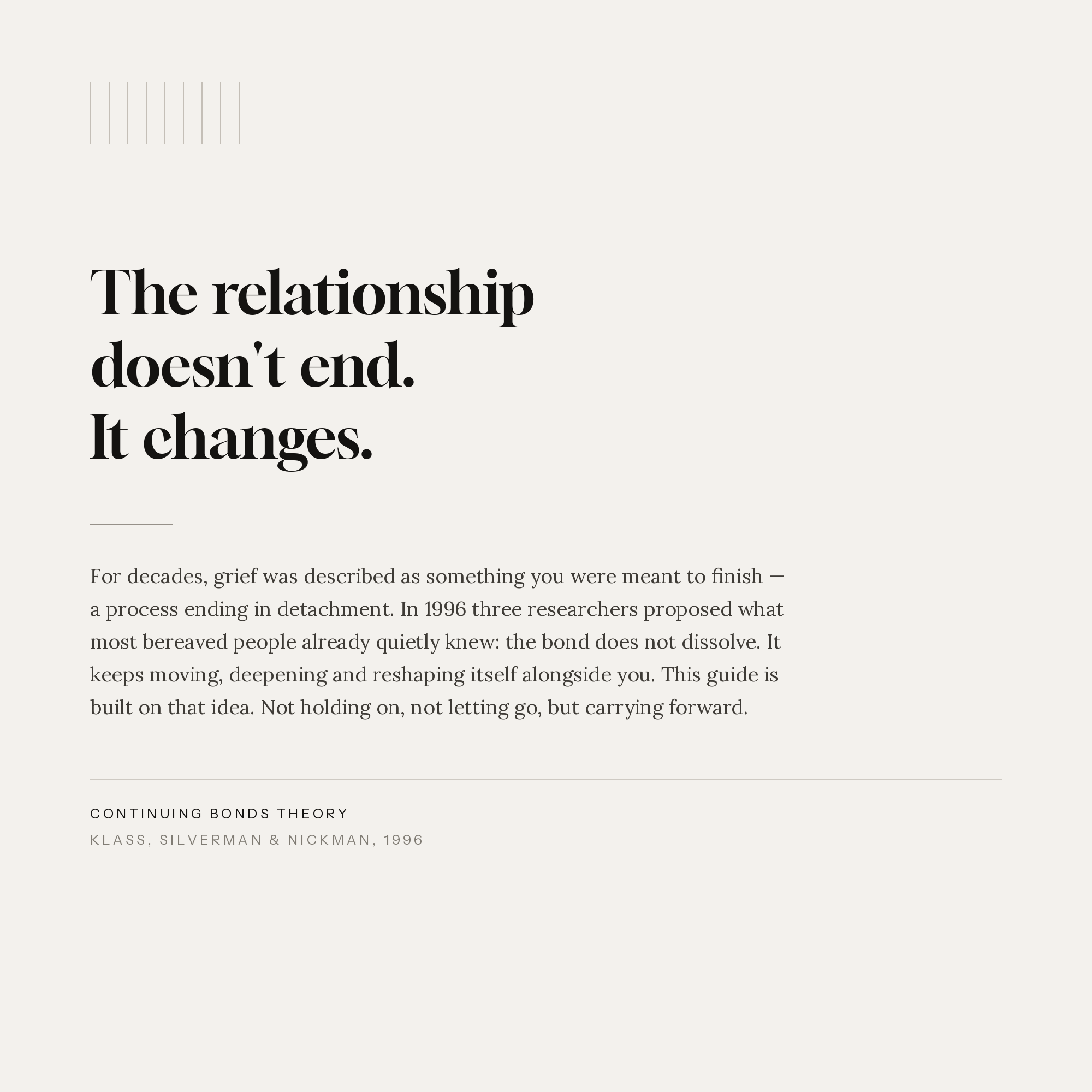
In 1996, researchers Dennis Klass, Phyllis Silverman and Steven Nickman proposed what has since become one of the most useful ideas in grief work: the relationship doesn't end when someone dies. It changes. You keep knowing them. Your understanding of them keeps growing. The bond moves alongside you.
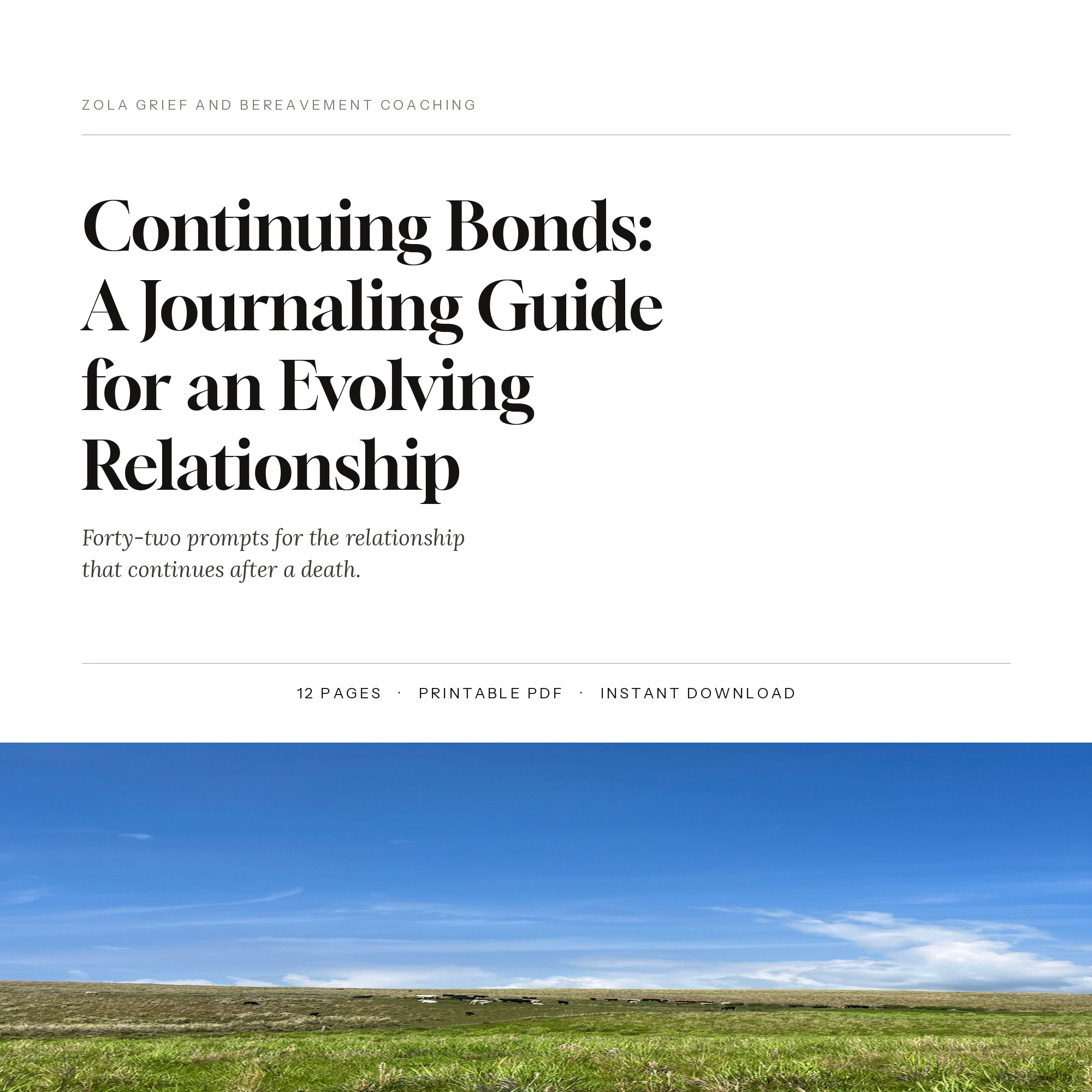
This guide is built on that idea. Forty-two writing prompts across seven sections, designed to help you tend the relationship rather than close it.
WHAT'S INSIDE
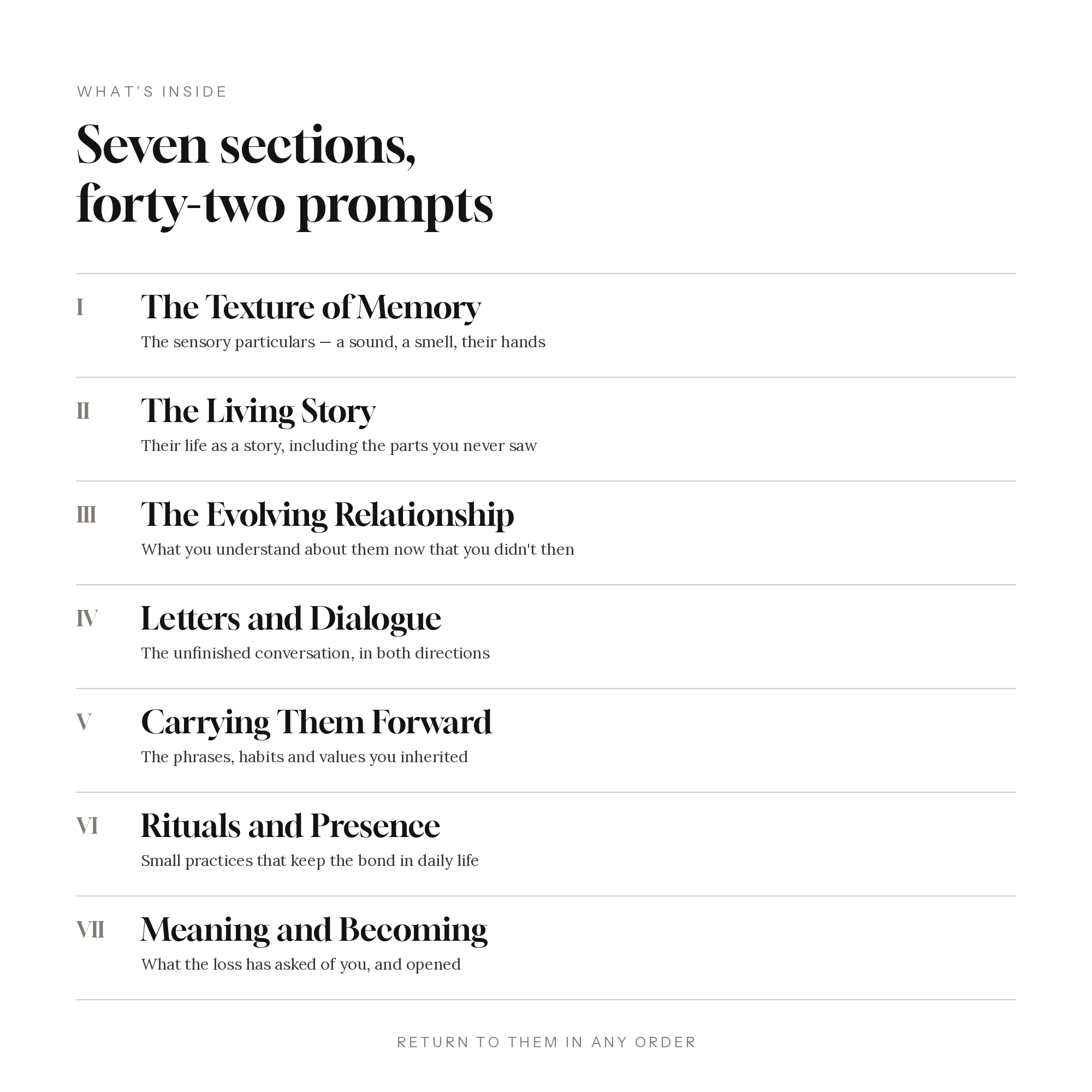
I. The Texture of Memory — the sensory particulars: a laugh, a smell, the shape of their hands
II. The Living Story — their life as a story, including the chapters you never saw
III. The Evolving Relationship — what you understand about them now that you didn't then
IV. Letters and Dialogue — the unfinished conversation, in both directions
V. Carrying Them Forward — the phrases, habits and values you inherited without noticing
VI. Rituals and Presence — small practices that keep the bond in ordinary daily life
VII. Meaning and Becoming — what this loss has asked of you, and what it has opened
WHAT YOU GET
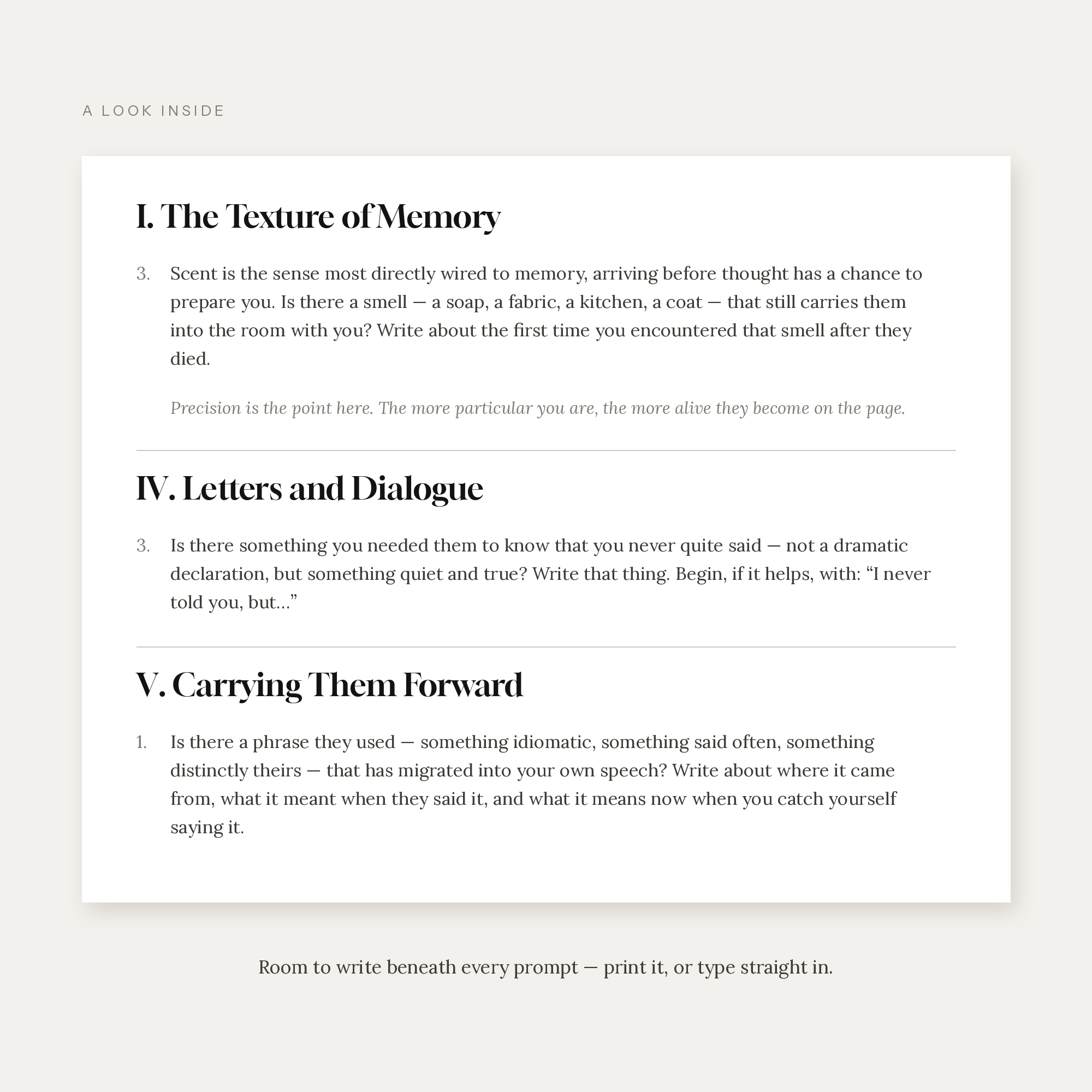
A 12-page PDF, formatted for landscape printing or for reading on a screen. Print it, put it in a binder, or write alongside it in a notebook of your own. It's yours to keep and return to.
HOW TO USE IT
This isn't a course with a destination and there's no order you're supposed to follow. Some prompts will find you ready. Some will wait months. A few may never be yours, and that's fine. Open it where you land.
WHO IT'S FOR
Anyone grieving a death — a parent, partner, child, sibling, friend — at any point after the loss. It works as well in year five as in month two, and often better. Also useful for therapists, grief coaches and support group facilitators, though group and professional use requires a license (details are on the terms page, and I'm glad to arrange one).
A NOTE
This is a digital download. No physical item ships. It's educational material, not a substitute for therapy or crisis care.
Created by Molly Zola, Zola Grief and Bereavement Coaching.
For a long time, grief was described as something you were supposed to finish. You worked through the stages, arrived somewhere, and moved on. Most bereaved people know that isn't how it goes.
In 1996, researchers Dennis Klass, Phyllis Silverman and Steven Nickman proposed what has since become one of the most useful ideas in grief work: the relationship doesn't end when someone dies. It changes. You keep knowing them. Your understanding of them keeps growing. The bond moves alongside you.
This guide is built on that idea. Forty-two writing prompts across seven sections, designed to help you tend the relationship rather than close it.
WHAT'S INSIDE
I. The Texture of Memory — the sensory particulars: a laugh, a smell, the shape of their hands
II. The Living Story — their life as a story, including the chapters you never saw
III. The Evolving Relationship — what you understand about them now that you didn't then
IV. Letters and Dialogue — the unfinished conversation, in both directions
V. Carrying Them Forward — the phrases, habits and values you inherited without noticing
VI. Rituals and Presence — small practices that keep the bond in ordinary daily life
VII. Meaning and Becoming — what this loss has asked of you, and what it has opened
WHAT YOU GET
A 12-page PDF, formatted for landscape printing or for reading on a screen. Print it, put it in a binder, or write alongside it in a notebook of your own. It's yours to keep and return to.
HOW TO USE IT
This isn't a course with a destination and there's no order you're supposed to follow. Some prompts will find you ready. Some will wait months. A few may never be yours, and that's fine. Open it where you land.
WHO IT'S FOR
Anyone grieving a death — a parent, partner, child, sibling, friend — at any point after the loss. It works as well in year five as in month two, and often better. Also useful for therapists, grief coaches and support group facilitators, though group and professional use requires a license (details are on the terms page, and I'm glad to arrange one).
A NOTE
This is a digital download. No physical item ships. It's educational material, not a substitute for therapy or crisis care.
Created by Molly Zola, Zola Grief and Bereavement Coaching.